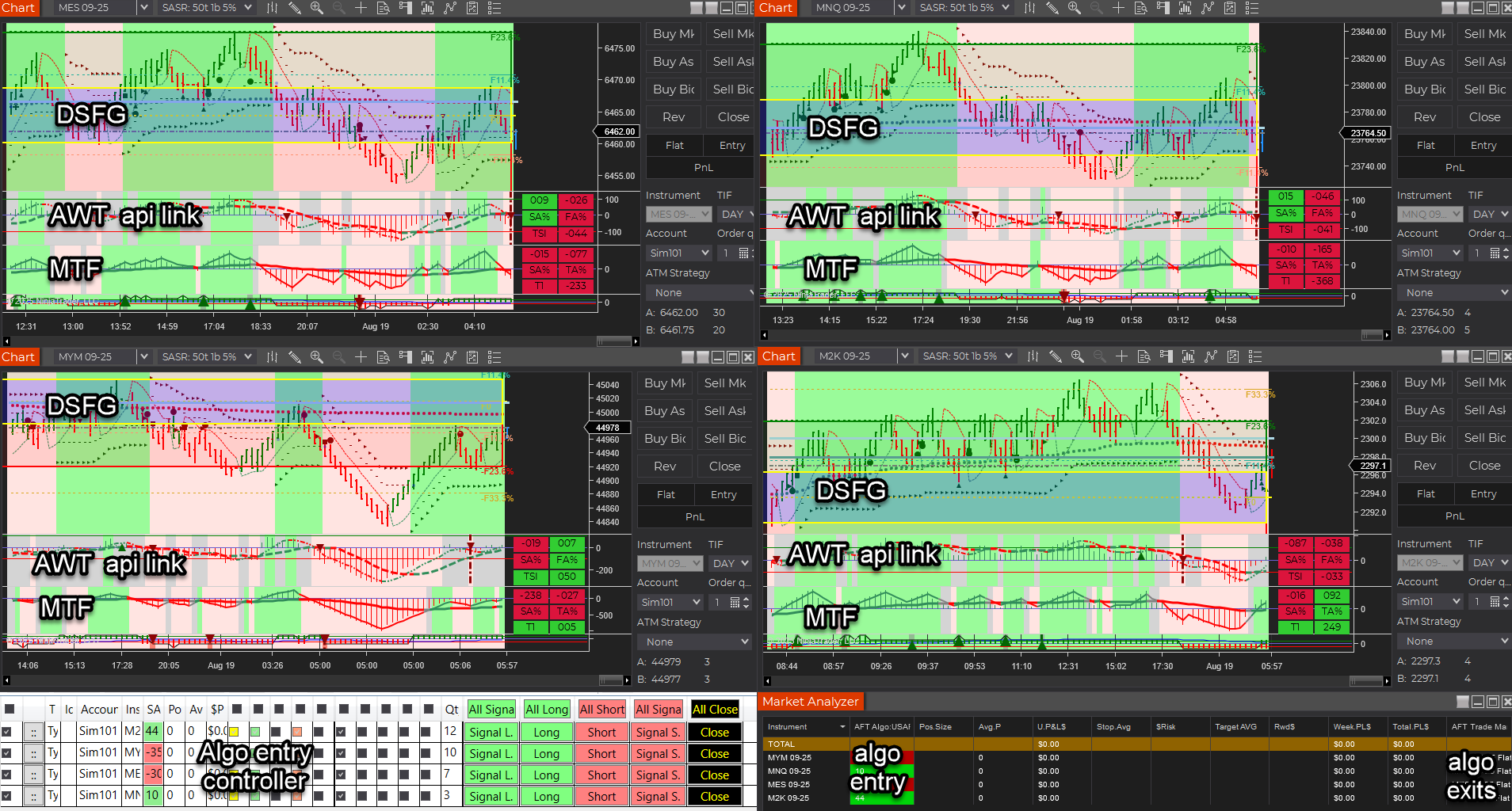
NinjaTrader Automated Trading by Algo Futures Trader

hybrid algorithmic automated futures trading for prop firm traders, day & swing traders

🚀 Get Started 🔮LIVE
  • 🚀Get Started
  • NinjaTrader
  • Get Funded
  • Trading Servers
  • Pricing
  • blog
  • Help

Book list reading list on trading systems performance

January 5, 2025 by AFT


Books on Trading System Analysis and Improvement


Books on Trading System Analysis and Improvement

Here’s a curated list of books on system expectancy, trading performance measurement, and related concepts to deepen your understanding of trading system analysis and improvement:

Trading System Development and Expectancy

  1. “Trade Your Way to Financial Freedom” by Van K. Tharp
    • A comprehensive guide to system development, expectancy, and position sizing.
    • Focuses on creating systems tailored to your trading psychology and goals.
  2. “Building Winning Algorithmic Trading Systems” by Kevin Davey
    • Offers practical advice on designing, testing, and optimizing trading systems.
    • Emphasizes risk management and long-term profitability.
  3. “Design, Testing, and Optimization of Trading Systems” by Robert Pardo
    • A detailed guide on developing and validating trading systems.
    • Introduces robust testing techniques and optimization strategies.

Risk and Money Management

  1. “The Mathematics of Money Management” by Ralph Vince
    • A deep dive into money management strategies and their impact on trading expectancy.
    • Explores concepts like optimal bet sizing and drawdown control.
  2. “The New Trading for a Living” by Dr. Alexander Elder
    • Covers trading psychology, system design, and risk management.
    • Includes practical tools for measuring and improving system performance.
  3. “Position Sizing: The Key to Maximum Returns” by Van K. Tharp
    • Explains how position sizing impacts trading system expectancy and overall results.

Performance Measurement and Trading Metrics

  1. “Beyond Technical Analysis” by Tushar S. Chande
    • A focus on system development and performance measurement metrics.
    • Introduces innovative methods for evaluating trading systems.
  2. “Systematic Trading” by Robert Carver
    • Covers quantitative approaches to trading and performance evaluation.
    • Explains how to test, measure, and refine trading systems.
  3. “Quantitative Trading Systems” by Howard B. Bandy
    • Discusses the mathematics and analysis behind trading systems.
    • Provides actionable advice on evaluating system performance.

General Trading and Market Analysis

  1. “The Art of Trading: A Complete Guide to Trading the Markets” by Christopher Tate
    • Combines trading psychology, technical analysis, and system evaluation.
    • Great for beginners looking to understand expectancy and performance metrics.
  2. “Trading Systems and Methods” by Perry J. Kaufman
    • A classic, comprehensive resource on trading system development and analysis.
    • Covers tools, metrics, and strategies for system evaluation.
  3. “Thinking in Bets” by Annie Duke
    • Focuses on decision-making under uncertainty, relevant to trading expectancy.
    • Explains how to approach probability and outcomes objectively.

Trading Psychology and Long-Term Performance

  1. “The Disciplined Trader” by Mark Douglas
    • Explores the psychological aspects of trading and their impact on performance.
    • Includes methods to build consistency and discipline in trading.
  2. “Trading in the Zone” by Mark Douglas
    • Focuses on mindset and emotional control to enhance system performance.
    • Complements expectancy by addressing trader behavior.
  3. “The Mental Game of Trading” by Jared Tendler
    • Explores the psychological challenges of trading and how to overcome them.
    • Offers tools for improving discipline and maintaining focus.

These books cover a mix of technical, quantitative, and psychological aspects of trading, offering a well-rounded approach to improving your systems and understanding expectancy.


Filed Under: AFT8, Algo Futures Trader, automated futures trading system, automated trade management, automated trading ninjatrader Tagged With: automated futures trading, automated futures trading software, automated futures trading strategies, automated futures trading system, automated futures trading systems, Automated Trading NinjaTrader, automated trading with ninjatrader, best automated futures trading software, fully automated trading system, futures algo trading, futures algorithmic trading, futures automated trading, futures trading algorithms, ninjatrader algorithmic trading, ninjatrader automated trading, ninjatrader automated trading systems, ninjatrader trading bot, ninjatrader trading systems


🚀 Get Started 100% FREE!

Trading System Win Rates: Ranges, Realities, and Refinements

January 5, 2025 by AFT

I was recently asked, “What win ratio percentage do your algos achieve?” This is a broad and open-ended question. It is a good question, but not a great one. It is not the kind of question a professional trader or fund manager would usually ask. They would be more likely to ask about NAV, percentage return, drawdown, or, better still, expectancy—and then discuss win ratio, risk-reward, and system preference from there.

Let’s put the question into proper perspective.

AFT (Algo Trading Framework) is a comprehensive trading framework with preconfigured turnkey systems that give traders a ready-made starting point. At the same time, it also allows traders to configure, combine, and even code their own system rules. With such a broad range of features and flexibility, there is no single answer to what a system can achieve. The permutations are extensive, and traders can spend years refining, optimizing, and evolving their own approach if they choose.

For many traders, the journey begins with the turnkey systems, which provide a solid baseline. From there, traders can learn the process, optimize their execution, experiment carefully, and build a more personalized approach. Some traders keep things simple and stay close to the turnkey setups, while others evolve into a highly refined hybrid trading style. Either way, AFT adapts to the trader’s skill level and objectives.

Win Rates Vary Widely

Trading system win rates can vary widely depending on the trader’s goals, the style of system, the market traded, and the system rules in play. In general, trading systems can range anywhere from 35% to 95% win rates. However, win percentage alone tells very little unless you also understand the risk-reward profile and the expectancy of the system.

Baselines, Win Rates, and System Profiles

At Algo Trading Systems, baseline systems are intended to be starting points. They are not fixed promises, guarantees, or magic settings. They are framework baselines that reflect a certain trading style and system profile, and the actual results always depend on the trader, the rules being used, market conditions, and execution quality.

Typical Baseline Ranges

  • Session Breakout System: 50% to 66% is a typical range.
  • Trend Scalper System: 66% to 85% is a typical range.

These are not hard promises. They are typical baseline profile ranges and depend entirely on the system rules in play, which ultimately comes down to the trader.

Baseline Profile by System Type

Baseline Session Breakout is generally a looser system profile. It is broader in structure and typically targets around 50% average win rate with a positive risk-reward goal of approximately 1:1.25.

Baseline Trend Scalper is generally a tighter system profile. It is designed to seek more frequent accuracy and typically targets around 65% average win rate with a 1:1 risk-reward goal.

This is why win percentage on its own can be misleading. A lower win rate with better risk-reward can outperform a higher win rate with poor expectancy. The real question is always how win ratio and risk-reward work together over a meaningful sample of trades.

In the real world, traders using hybrid methods, better trade selection, timing, and execution may improve on the baseline profile substantially. That improvement comes from skill, discretion, and experience—not from simply chasing settings.

Why Win Percentage Alone Is Misleading

Win percentage is an important metric, but it cannot determine profitability on its own. For example, a system with a 95% win rate could still lose money after commissions, slippage, and costs if the losses are too large relative to the wins.

A more useful measure combines win ratio and risk-reward into expectancy. For example:

  • A 65% win rate with a 1:1 risk-reward ratio is excellent.
  • A 50% win rate with a 1:2 risk-reward ratio would be exceptional.
  • A 50% win rate with a 1:1.25 risk-reward ratio is more typical and sustainable.

Example: High Win Ratio Scalper System (ES Futures)

Consider a scalping system with the following parameters:

  • Stop: 24 ticks
  • Target: 8 ticks

If we assume random price movement without any real edge or strategy, the probability of price hitting the target or stop is broadly related to their relative distances from entry. The nearer price objective is more likely to be reached first.

Probabilities

  • Target Being Hit: 75%
  • Stop Being Hit: 25%

That means the system could achieve a 75% win rate largely on distance bias alone, even without any genuine trading edge.

Adjusted Example: Smaller Target

  • Stop: 28 ticks
  • Target: 6 ticks
  • Total Distance: 34 ticks

Probabilities

  • Target Being Hit: 82.35%
  • Stop Being Hit: 17.65%

In this case, the target is 82.35% likely to be hit because it is much closer to the entry point than the stop.

Caveats of High Win Ratios

While this kind of system heavily favors hitting the target, it also creates a poor risk-reward profile. In this example, the system would need a very high win rate just to overcome the imbalance.

Improving the System

The way to improve a system is not simply by pushing targets closer to inflate the win rate. A better approach is to align trading with high-probability times and better conditions.

  • Stop: 20 ticks
  • Targets: 20, 40, and 100

With trading skill and discipline, it is realistic to move a system from around 50% to 65% or higher.

Introduction to Expectancy

Expectancy combines win percentage and risk-reward ratio to estimate the average outcome per trade.

Expectancy Example 1: Negative

  • Loss: 24 ticks
  • Reward: 12 ticks
  • Win %: 66%

Expectancy = (0.66 × 12) − (0.34 × 24) = -0.24

This system loses over time despite a strong win rate.

Expectancy Example 2: Positive

  • Loss: 24 ticks
  • Reward: 20 ticks
  • Win %: 66%

Expectancy = (0.66 × 20) − (0.34 × 24) = +5.04

This system is profitable over time.

Combining Systems for Success

Using AWT with AFT improves trade selection and confirmation, increasing win rate and expectancy without changing stops or targets.

Traders may achieve 85%+ in strong conditions, but a consistent ~66% with 1:1 risk-reward is already high-level performance.

Conclusion

Hybrid trading allows you to increase win rate without destroying system profile. The goal is not chasing settings but improving execution, timing, and discipline.

It is about refining one robust method until performance becomes consistent and repeatable.

A Simple Analogy

Think of it like a Tesla on autopilot vs. a skilled driver. The system performs—but the human enhances performance through adaptation and control.

Trading is dynamic. The edge comes from human + machine, not automation alone.

Filed Under: AFT Trading Videos, AFT8, Algo Futures Trader, automated futures trading system, automated trade entry, automated trade management, Automated Trading Videos, Get Funded Tagged With: automated futures trading, automated futures trading software, automated futures trading strategies, automated futures trading system, automated futures trading systems, Automated Trading NinjaTrader, automated trading with ninjatrader, best automated futures trading software, fully automated trading system, futures algo trading, futures algorithmic trading, futures automated trading, futures trading algorithms, ninjatrader algorithmic trading, ninjatrader automated trading, ninjatrader automated trading systems, ninjatrader trading bot, ninjatrader trading systems


🚀 Get Started 100% FREE!

Winning Attitudes vs Losing Aptitudes

December 22, 2024 by AFT

Winning Attitudes:

Minds wide open! Start a systematic winning approach, get a routine, and make it a habit—the habit will make you or break you!

  • Receptiveness and Discipline: Successful traders are like sponges, absorbing knowledge and following a process. They understand the value of step-by-step learning and repetition, which builds a solid foundation for trading.
  • Documentation and Reflection: Keeping records (screenshots, market context, higher time frames, intra-day cycles, entry/exits, trade notes, journals) is vital. This allows for review, analysis, and improvement over time. It’s like having a feedback loop for your trading.
  • Action-Oriented: They emphasize taking action, even in a simulated environment. This builds confidence and experience. Analysis paralysis is a common pitfall, and these traders avoid it.
  • Progressive Learning: They understand that trading is a journey, not a destination. They focus on continuous improvement and expanding their knowledge gradually.
  • Openness to New Approaches: They are willing to explore hybrid methods and incorporate techniques like our Zero to Hero Trader Program and utilize NLP to enhance their trading performance.

Losing Aptitudes:

System jumping, grail seeking, closed mind, lost wanting help to get help, self-entitlement or inherent laziness and impatience “needing”

  • Impatience and Resistance: Traders who struggle often resist structure and process. They want shortcuts and instant gratification.
  • Information Overload: Seeking the “magic formula” or demanding PDFs of all settings can signify wanting answers without putting in the work.
  • Lack of Foundation: Jumping into live trading without understanding the basics is a recipe for disaster. It’s like building a house on sand.
  • Emotional Trading: Fear, greed, and recency bias (overemphasizing recent events) drive impulsive decisions, leading to losses.
  • Closed-Mindedness: Dismissing new ideas or approaches can limit their growth potential.
  • Inability to Self-Assist: Self-entitlement or sheer laziness leads to questions like, “What is the news? How do I find an answer?” instead of seeking solutions independently.

Your Call to Action:

“If you want to master trading for free with hybrid methods—and experience the life-changing and trader-changing success that trading and NLP can bring—attend our Zero to Hero Trader Program!”

We throw you the rope, but you must grab it…

  • This is exclusively for winning-mindset traders or those who want to transition from losing to winning with an open mind!
  • There is no secret; the cost of success is time, effort, and focus.
  • Leverage our trading tools for minimum drawdown, least emotion, and maximum profit.

Filed Under: AFT8, NinjaTrader 8, ninjatrader automated trading Tagged With: automated futures trading, automated futures trading software, automated futures trading strategies, automated futures trading system, automated futures trading systems, Automated Trading NinjaTrader, automated trading with ninjatrader, best automated futures trading software, fully automated trading system, futures algo trading, futures algorithmic trading, futures automated trading, futures trading algorithms, ninjatrader algorithmic trading, ninjatrader automated trading, ninjatrader automated trading systems, ninjatrader trading bot, ninjatrader trading systems, psychology, zero to hero


🚀 Get Started 100% FREE!

Manual Backtesting and NLP: A Synergistic Approach

December 22, 2024 by AFT

Diving Deep into Manual Backtesting: A Step-by-Step Guide for Traders

In the world of trading, where uncertainty reigns supreme, backtesting offers a beacon of clarity. It allows traders to test their strategies against historical data, providing valuable insights into their potential profitability and risk. While automated backtesting tools are readily available, manual backtesting offers a deeper understanding of your system’s mechanics and nuances. This article serves as a comprehensive guide to manual backtesting, focusing on systematic chart signals for long and short trades, entry orders, and exit orders.

What is Manual Backtesting?

Manual backtesting involves manually analyzing historical price charts to determine how a trading strategy would have performed in the past. This hands-on approach allows traders to meticulously evaluate each trade, identify patterns, and understand the reasoning behind wins and losses.

Why Choose Manual Backtesting?

While automated backtesting offers convenience, manual backtesting provides:

  • Deeper Understanding: Manually analyzing charts fosters a profound understanding of your strategy’s strengths and weaknesses in different market conditions.
  • Pattern Recognition: By visually inspecting charts, you can identify recurring patterns and refine your strategy accordingly.
  • Flexibility: Manual backtesting allows for subjective judgment, enabling you to account for nuances that automated systems might miss.
  • Enhanced Intuition: The process hones your trading intuition and helps you develop a feel for the market.

Manual Backtesting and NLP: A Synergistic Approach

Combining the strengths of manual backtesting with the power of NLP (Neuro-Linguistic Programming) can indeed elevate your trading game to new heights. Let’s explore how these elements intertwine: Manual backtesting provides a deep, intuitive understanding of your trading system. NLP, on the other hand, offers tools to enhance your mental processes and program your mind for success. Here’s how they complement each other:

  • Sharpened Sensory Acuity (See, Speak, Hear): NLP emphasizes the importance of sensory awareness. By consciously engaging your senses (sight, sound, even kinesthetic feeling) during manual backtesting, you become more attuned to subtle nuances in the charts.
    • See: Observe chart patterns with heightened focus, noticing subtle breaks in trends, volume shifts, and candlestick formations.
    • Speak: Verbalize your observations as you analyze the charts, green long, red short! This reinforces pattern recognition and strengthens neural pathways associated with successful trading.
    • Hear: Imagine the “sound” of the market with signals, indicators, and alerts, while a consolidation might feel “quiet.”
  • Programming the Mind for Expertise: NLP techniques like visualization, anchoring, and affirmations can be integrated into your backtesting routine.
    • Visualization: Imagine yourself executing trades flawlessly, adhering to your system with discipline and confidence.
    • Anchoring: Associate a specific touch or gesture with a successful trade or a state of focused trading. Trigger this anchor to instantly access that resourceful state.
    • Affirmations: Use positive affirmations like, “I am a disciplined trader,” or “I consistently follow my system,” to reinforce positive trading beliefs.
  • Accelerated Learning: NLP can help you learn from your backtesting experience more effectively.
    • Modeling: Study the charts of VIP Trading Playbook in the ATS VIP Group, and identify their patterns of decision-making. Integrate these patterns into your trading.
    • Meta-Modeling: Ask yourself powerful questions about your trading system, such as, “What are the key distinctions that make this signal successful?” or “How can I refine my entry to improve profitability?”
  • Emotional Mastery: Trading psychology is crucial. NLP provides techniques to manage emotions like fear and greed.
    • Reframing: Reframe negative thoughts or experiences during backtesting. For example, view a losing trade as a learning opportunity rather than a failure.
    • Dissociation: If you find yourself emotionally attached to a particular trade during backtesting, dissociate from the experience by viewing it as if it were happening to someone else. This helps you maintain objectivity.

Example: Integrating NLP into the USAR Trend Trading Strategy

Let’s revisit our previous example and incorporate NLP:

  1. Visual Acuity: As you scan the chart for long green signals, pay close attention to the state of the price action, indicators, volume accompanying, and the overall market context.
  2. Auditory Reinforcement Buy: When you spot a valid entry buy signal, say aloud, “Green Signal! long.” When exiting, say, “Reversal! Trade Exit long.”
  3. Auditory Reinforcement Sell: When you spot a valid entry sell signal, say aloud, “Red Signal! short.” When exiting, say, “Reversal! Trade Exit Short.”
  4. Kinesthetic Anchoring: As you record a winning trade in your spreadsheet, make a fist and say, “Winning trade!” Associate this gesture with the feeling of success.
  5. Visualization: Before each trading day (in your backtest), visualize yourself calmly analyzing the chart, identifying signals, and executing trades with precision.
  6. Affirmations: Repeat affirmations like, “I am a skilled trader who identifies high-probability setups.”

Tools for Manual Backtesting:

  • Historical Price Charts: Access to high-quality charts with various timeframes is essential.
  • Spreadsheet Software: A spreadsheet (e.g., Excel, Google Sheets) helps record trade details, calculate performance metrics, and analyze results.
  • Trading Journal: A journal to document observations, insights, and emotional responses during the backtesting process.

Steps to Manual Backtesting:

  1. Define Your Trading Strategy:
    • Systematic Chart Signals: Clearly define the chart patterns or indicators that trigger your entry and exit signals. Examples include:
      • Long Entry: Bullish engulfing pattern, breakout above resistance, signals indicators green signal long
      • Short Entry: Bearish engulfing pattern, breakdown below support, signals indicators red signal short
    • Trade Direction: Specify whether your strategy focuses on long trades (buy low, sell high), short trades (sell high, buy low), or both.
    • Entry Orders: Determine your order types for entering trades. Common types include:
      • Market Orders: Execute immediately at the current market price.
      • Limit Orders: Buy at a specified price or lower, or sell at a specified price or higher.
      • Stop Orders: Buy at a specified price or higher (stop-loss buy), or sell at a specified price or lower (stop-loss sell).
    • Exit Orders: Define your rules for exiting trades, including:
      • Profit Targets: Predetermined price levels at which to take profits.
      • Stop-Loss Orders: Orders to limit potential losses by exiting a trade at a predetermined price level.
      • Trailing Stops: Dynamic stop-loss orders that trail the price as the trade moves in your favor.
  2. Select Your Backtesting Period:
    • Choose a historical period that reflects the market conditions against which you want to test your strategy. Consider including periods of high volatility, low volatility, bull markets, and bear markets.
    • Ensure sufficient data points for statistically significant results. Aim for at least several months or years of data, depending on your trading frequency.
  3. Analyze Historical Charts:
    • Start by examining price charts for your chosen period.
    • Meticulously identify instances where your entry signals occur.
    • Mark your entry point on the chart based on your chosen entry order type.
    • Apply your exit strategy rules to determine your exit points and mark them on the chart.
    • Record the details of each trade (entry date, entry price, exit date, exit price) in your spreadsheet.
  4. Calculate Performance Metrics:
    • Winning Trades: Calculate the percentage of trades that resulted in a profit.
    • Losing Trades: Calculate the percentage of trades that resulted in a loss.
    • Average Win: Determine the average profit per winning trade.
    • Average Loss: Determine the average loss per losing trade.
    • Risk-Reward Ratio: Calculate the ratio of average win to average loss.
    • Maximum Drawdown: Calculate the largest percentage decline from a peak to a trough in your trading capital during the backtesting period.
    • Profit Factor: Calculate the ratio of gross profit to gross loss.
    • Sharpe Ratio: Measure risk-adjusted return, considering the strategy’s volatility.
  5. Analyze and Refine Your Strategy:
    • Identify Patterns: Analyze your trading journal and spreadsheet data to identify recurring patterns in winning and losing trades.
    • Refine Entry and Exit Rules: Adjust your entry and exit signals based on your analysis to improve performance.
    • Optimize Risk Management: Refine your stop-loss and profit target strategies to manage risk effectively.
    • Consider Market Conditions: Evaluate how your strategy performs in different market conditions and adjust accordingly.

Example: Backtesting an AFT USAR Signals Indicator

Let’s illustrate manual backtesting with a basic example:

  • Strategy: Long and short trades – Close and Reverse (CAR) – for each short or long, close out and enter the new trade.
  • Entry Signal Long: Green Signal buy
  • Exit Order: If the position was short, exit the short at the close of the signal bar.
  • Entry Order: Market order at the close of the signal bar.
  • Entry Signal Short: Red Signal Sell
  • Exit Order: If the position was long, exit the long at the close of the signal bar.
  • Entry Order: Market order at the close of the signal bar.

Backtesting Process using the AFT USAR:

  1. Select a stock and timeframe: E.g., Nasdaq Emini Futures (NQ) 120min chart from 2020 to 2023.
  2. Plot the USAR: Add the USAR to the chart and set the signal mode to 1.
  3. Rewind the chart: Scroll all the way to the left, then move forward 7 days or more to the next new whole week to stabilize the plots.
  4. Identify Signals Long: View each instance of a Green Signal on the chart via the cursor crosshair.
  5. NLP: SPEAK, POINT, HEAR, WRITE, UNDERSTAND the signal concept.
  6. Enter Long Trades: Record the entry date and price of the signal bar.
  7. Identify Signals Short: View each instance of a Red Signal on the chart via the cursor crosshair.
  8. NLP: SPEAK, POINT, HEAR, WRITE, UNDERSTAND the signal concept.
  9. Exit Long Trades: Record the exit date and price of the signal bar.
  10. Calculate Performance Metrics: Use the recorded trade data to calculate metrics like winning percentage, average win/loss, maximum drawdown, etc.

Tips for Effective Manual Backtesting:

  • Be Objective: Avoid biases and emotional attachments to your strategy.
  • Maintain Discipline: Strictly adhere to your defined rules throughout the process.
  • Document Everything: Keep detailed records of your trades and observations in your trading journal.
  • Start Simple: Begin with a basic strategy and gradually add complexity as you gain experience.
  • Practice Patience: Manual backtesting can be time-consuming, but the insights gained are invaluable.
  • NLP: SPEAK, POINT, HEAR, WRITE, UNDERSTAND, PROGRAM THE SUBCONSCIOUS WITH COMPETENCE!

Conclusion:

Manual backtesting provides a powerful framework for evaluating trading strategies and refining your approach to the markets. By diligently following the steps outlined in this guide, you can gain a deeper understanding of your system’s strengths and weaknesses, ultimately improving your trading performance and increasing your chances of success. While the process requires time and effort, the rewards in terms of knowledge and confidence are well worth the investment.

By integrating NLP techniques into your manual backtesting process, you create a powerful synergy that accelerates learning, enhances intuition, and improves emotional control. This holistic approach transforms backtesting from a mere analytical exercise into a transformative experience that programs your mind for trading success.

Within our Zero To Hero Program – Enter the Trading Matrix

  • Action Over Inaction: Program your trading mind through action, not endless questions, and procrastination.
  • No Need for Overanalysis: Don’t get bogged down in the “why” behind everything. Focus on what works.
  • The Holy Grail is a Myth: Forget searching for the perfect settings. Consistent profitability comes from mastering a system, not chasing magic formulas.
  • Chart Time is King: Ditch the endless books and internet theories. Real learning happens on the charts. Get screen time!
  • Embrace NLP: Sharpen your senses with NLP techniques. See, hear, draw, analyze, and document your observations.
  • Slow and Steady Wins the Race: Gradually add nuances and filters to your system. Don’t rush. Less is often more. Slow down to go faster.
  • Earn Your Optimization Stripes: Fine-tune settings only after you’ve developed a deep understanding of your system.
  • Market Mastery: Learn to read the market and identify high-probability trading opportunities. Sometimes, the best trade is no trade.
  • The Professional Mindset: Approach trading as a profession, not a gamble. Focus on mastery, not just money.
  • Success is Multifaceted: True success in trading goes beyond financial gains. It’s about discipline, skill, and continuous growth.
  • Rise Above the Average: Leave behind the losing mentality of the masses. Become an elite ATS Trader.

Why This Works:

  • Emphasis on Action: Trading is a skill that requires practice. This program encourages immediate action, which is crucial for developing competence.
  • Focus on Practicality: It cuts through the fluff and focuses on what truly matters: chart analysis, pattern recognition, and consistent execution.
  • NLP Integration: NLP techniques can significantly enhance a trader’s focus, emotional control, and learning process.
  • Long-Term Vision: It emphasizes the importance of patience, discipline, and continuous learning, which are essential for long-term success in trading.

This framework provides a solid foundation for aspiring traders to develop the skills and mindset needed to thrive in the markets.

Trader Failings and Trader Success

The main failing in trading is trader psychology. With NLP techniques, this can be reset and programmed for success over time with discipline and routine. Clear the mind—as funny as it might sound—try to become like the Bruce Lee of trading: Zen-like, with economy of mind and action! Clear the clutter and rubbish from the mind and make a straight line—the fastest, easiest way to the target. Reset and start at stage 1 and work to stage 4 onwards…with a plan, you can recite and see in your mind—your trading day and actions. Remove the human element from trading—become a stoic machine, ambivalent to lose or win. Focus on the process and being a pro! Get good at the game, and success will follow. By leveraging manual processes and routines, you can erase self-sabotage and negative trader psychology and replace it with a winning, machine-like trader mind! Our tools and methods fit with this ethos and are purpose-built for minimum drawdown, maximum profit—full control and success.

Filed Under: AFT8 Tagged With: automated futures trading, automated futures trading software, automated futures trading strategies, automated futures trading system, automated futures trading systems, Automated Trading NinjaTrader, automated trading with ninjatrader, best automated futures trading software, fully automated trading system, futures algo trading, futures algorithmic trading, futures automated trading, futures trading algorithms, ninjatrader algorithmic trading, ninjatrader automated trading, ninjatrader automated trading systems, ninjatrader trading bot, ninjatrader trading systems


🚀 Get Started 100% FREE!

How to perform Network testing for a trading server?

December 22, 2024 by AFT

Network testing for a trading server requires a rigorous approach to ensure the lowest latency and highest reliability. Here’s a breakdown of the gold standard in testing methodologies and tools:

1. Key Performance Indicators (KPIs)

  • Latency: This is the most critical metric. Measure round-trip time (RTT) in microseconds (”s) for order submission and market data updates. Aim for consistently low latency with minimal jitter (variation in latency).
  • Jitter: Variations in latency can disrupt order execution timing. Measure jitter to identify inconsistencies in network performance.
  • Packet Loss: Lost packets can lead to missed orders or inaccurate market data. Measure packet loss as a percentage of total packets sent.
  • Throughput: Ensure sufficient bandwidth for peak trading volumes. Measure throughput in megabits or gigabits per second (Mbps or Gbps).
  • Error Rate: Monitor for network errors that can disrupt trading activity. Measure errors per second or as a percentage of total traffic.

2. Testing Tools & Techniques

  • Network Simulation Tools:
    • Hardware Simulators: Expensive but offer the most realistic testing environment. Examples include Spirent TestCenter and Ixia IxNetwork.
    • Software Simulators: More affordable and flexible. Examples include Packet Tracer, GNS3, and OPNET Modeler.
  • Dedicated Testing Environment: Replicate your production environment as closely as possible for accurate results. This includes network hardware, server configurations, and market data feeds.
  • Load Testing: Simulate peak trading conditions with high message rates and order volumes. Tools like LoadRunner or JMeter can be used.
  • Stress Testing: Push the network beyond its limits to identify breaking points and bottlenecks.
  • Failover Testing: Simulate network failures (e.g., link or switch failure) to verify redundancy and failover mechanisms.
  • Monitoring Tools: Use real-time network monitoring tools to identify performance issues during testing. Examples include SolarWinds Network Performance Monitor and PRTG Network Monitor.

3. Best Practices

  • Baseline Testing: Establish a performance baseline in a controlled environment.
  • Continuous Monitoring: Continuously monitor network performance during testing and in production.
  • Automated Testing: Automate tests to ensure consistency and repeatability.
  • Documentation: Thoroughly document test procedures, results, and analysis.

4. Specialized Considerations for Trading Servers

  • Co-location: If your server is co-located with an exchange, focus on testing connectivity to the exchange’s network.
  • Market Data Feeds: Test the performance of your market data feeds with tools like those from Vela Trading Technologies or Refinitiv.
  • Order Routing: Test the entire order routing path, from your trading application to the exchange and back.
  • Time Synchronization: Ensure accurate time synchronization using NTP (Network Time Protocol) servers.

5. Example Test Scenarios:

  • Latency under peak load: Simulate high message rates and order volumes to measure latency under stress.
  • Packet loss during market volatility: Simulate a period of high market volatility with rapidly changing prices to measure packet loss.
  • Failover to backup network link: Simulate a primary network link failure to verify failover to a backup link.

By following these guidelines, you can establish a gold standard for network testing your trading server, ensuring optimal performance, reliability, and successful trading outcomes.

Note: We performed many of the above tests when selecting QuantVPS as our preferred Trading Server providers.

Filed Under: Algo Futures Trader Tagged With: automated futures trading, automated futures trading software, automated futures trading strategies, automated futures trading system, automated futures trading systems, Automated Trading NinjaTrader, automated trading with ninjatrader, best automated futures trading software, fully automated trading system, futures algo trading, futures algorithmic trading, futures automated trading, futures trading algorithms, ninjatrader algorithmic trading, ninjatrader automated trading, ninjatrader automated trading systems, ninjatrader trading bot, ninjatrader trading systems


🚀 Get Started 100% FREE!

Limited Seats and Rigorous Selection Process for Elite Trading Community

December 21, 2024 by AFT

Limited Seats and Rigorous Selection Process for Elite Trading Community

AlgoTradingSystems.net (ATS), a leading provider of automated trading systems for NinjaTrader, is raising the bar for trader performance by introducing a rigorous selection process and limited seats for its exclusive trading community. This initiative focuses on cultivating a high-trader IQ trading environment where dedicated individuals can thrive and achieve their goals without the chaos of large trading groups, the blind leading the blind typical of the retail trading ecosystem, or becoming dependent on a guru or trade leader. The best gift to anyone is financial freedom and independence, and this is always our focus and raison d’ĂȘtre.

The ATS Approach: Quality Over Quantity

ATS recognizes that not all traders are created equal. To foster an environment of excellence, the company has implemented a multi-faceted approach:

  • Trader Selection: Access to ATS systems and trading groups is limited to those who demonstrate a strong understanding of trading principles, a commitment to continuous learning, and a winning mindset.
  • Discovery Meeting: Potential members undergo a comprehensive Discovery Meeting to assess their trading knowledge, experience, and goals. This ensures alignment with ATS’s values and community standards.
  • Onboarding & Setup: Every trader accepted after the Discovery Meeting will be invited to attend a one-to-one onboarding meeting to facilitate setup, installation, and access to VIP group resources.
  • Zero to Hero Program: Accepted traders embark on the “Zero to Hero” program, a unique blend of education, mentorship, and practical application. This program not only filters out less committed individuals but also equips traders with essential skills and habits for success.
  • Action, Routine, Habit: ATS emphasizes the importance of consistent action, disciplined routines, and winning habits. This structured approach fosters a culture of accountability and continuous improvement. Make the habit, and it will make you or break you – by following our methods, the winning mindset can succeed at trading.
  • Trader Reviews: The Trader Success Team provides regular trading reviews for free trialists and Zero to Hero attendees.
  • Real System Developer Support: The pioneer of automated trading for retail trading is on hand for one-to-one interactive support to assist trader journeys. Get it from the source!

The Benefits of an Elite Trading Community

By fostering a group of high-IQ traders, ATS creates a dynamic environment where members can:

  • Benefit from collective wisdom: Learn from experienced traders, share insights, and gain diverse perspectives on trading approaches.
  • Accelerate their learning curve: Receive personalized guidance and mentorship, fast-tracking their progress and avoiding common pitfalls.
  • Develop a winning mindset: Embrace a culture of discipline, resilience, and continuous improvement, essential for long-term trading success.
  • Access exclusive resources: Unlock advanced trading systems, tools, and educational materials designed to enhance performance and profitability.

Who Should Apply?

ATS encourages applications from traders who are:

  • Highly motivated and results-oriented: Individuals with a burning desire to succeed and a willingness to put in the effort required to achieve their goals.
  • Committed to continuous learning: Traders who are eager to expand their knowledge, refine their skills, and stay ahead of market trends.
  • Team players with a collaborative spirit: Individuals who value knowledge sharing, mutual support, and contributing to a community.
  • Possess systematic discipline: Traders who are committed to implementing consistent routines and developing winning habits.
  • Good Technical PC Skills: Traders who are able to use desktop, mobile, and web apps with confidence can self-assist prior to seeking support.

7 day Full Free Trial!

  • ATS Universal: Full features live trial
  • Trader Onboarding: Guided install & setup
  • Turnkey Workspaces: Zero to Hero Course
  • Indices Futures: VIP Trading Group
  • Trader Reviews: Progress Meetings

Trader Prerequisites

Suitable for traders fully committed to success

  • Self Qualify! Am I a suitable candidate?

Quality, Not Quantity. Thoroughbreds run best when they run together!

“We’re not just providing trading systems; we’re building an elite community of successful traders. By carefully selecting and nurturing talented individuals, we create a powerful synergy that elevates everyone’s performance – our ultimate goal would be to invert the recognized benchmark of 80% losing at day trading futures, to make it 80% winning at trading in our groups – and we are more than halfway there!” – Tom Leeson, CEO of ATS.

Filed Under: Algo Futures Trader Tagged With: automated futures trading, automated futures trading software, automated futures trading strategies, automated futures trading system, automated futures trading systems, Automated Trading NinjaTrader, automated trading with ninjatrader, best automated futures trading software, fully automated trading system, futures algo trading, futures algorithmic trading, futures automated trading, futures trading algorithms, ninjatrader algorithmic trading, ninjatrader automated trading, ninjatrader automated trading systems, ninjatrader trading bot, ninjatrader trading systems


🚀 Get Started 100% FREE!

  • « Previous Page
  • 1
  • …
  • 9
  • 10
  • 11
  • 12
  • 13
  • …
  • 33
  • Next Page »

🚀 Get Started 100% FREE!


Recent Posts

  • AFT8 Performance Tweaks for NinjaTrader 8.1.7
  • AFT Lifetime (One-Time Purchase) License Terms Updated
  • ATS Futures Trading Group Rebooted!
  • AFT8 version 20260518 released for compatibility with NinjaTrader 8 .1.7
  • What Algos Are Included in AFT8? Complete Guide to Signals, Hybrid Trading & Automation

Archives

  • May 2026
  • April 2026
  • March 2026
  • February 2026
  • January 2026
  • December 2025
  • November 2025
  • October 2025
  • September 2025
  • August 2025
  • July 2025
  • June 2025
  • February 2025
  • January 2025
  • December 2024
  • November 2024
  • October 2024
  • August 2024
  • June 2024
  • May 2024
  • April 2024
  • March 2024
  • February 2024
  • September 2023
  • August 2023
  • July 2023
  • June 2023
  • May 2023
  • October 2022
  • September 2022
  • August 2022
  • October 2021
  • August 2021
  • July 2021
  • June 2021
  • May 2021
  • April 2021
  • March 2021
  • February 2021
  • December 2020
  • November 2020
  • October 2020
  • September 2020
  • July 2020
  • June 2020
  • May 2020
  • April 2020
  • April 2018

Categories

  • AFT Trading Videos
  • AFT7 Turnkey Workspaces
  • AFT8
  • aft8 turnkey workspaces
  • Algo Futures Trader
  • Alpha Web Trader
  • AlphaBias
  • ATS Trading Community
  • automate trading groups
  • automated futures trading
  • automated futures trading system
  • automated futures trading systems
  • automated trade entry
  • automated trade management
  • automated trading ninjatrader
  • Automated Trading Videos
  • best automated futures trading software
  • fully automated trading system
  • futures automated trading
  • Get Funded
  • get funded trading
  • Micro EMini Equity Futures
  • NinjaTrader 7
  • NinjaTrader 8
  • ninjatrader algorithmic trading
  • ninjatrader automated trading
  • ninjatrader automated trading systems
  • ninjatrader trading bot
  • prop firm trading
  • TrendOmeter

Recent Comments

    Help & Information

    • ninjatrader automated trading
    • Automated Trading Systems
    • Support Center
    • Help Desk Articles
    • Trading Group & Forum
    • Videos

    Recent Posts

    • AFT8 Performance Tweaks for NinjaTrader 8.1.7
    • AFT Lifetime (One-Time Purchase) License Terms Updated
    • ATS Futures Trading Group Rebooted!
    • AFT8 version 20260518 released for compatibility with NinjaTrader 8 .1.7
    • What Algos Are Included in AFT8? Complete Guide to Signals, Hybrid Trading & Automation
    • Facebook
    • RSS
    • Twitter
    • YouTube


    • NinjaTrader Automated Trading
    • automated futures trading
    • automated trading systems
    • Day Trading Futures
    • Get Started Day Trading Futures
    • VIP Trading Group Live Market Trade Along
    • Secret to Day trading futures success
    • AFT8 for NinjaTrader 8
    • Futures Algo Trading Systems
    • Market News
    • NinjaTrader Free Trading Platform
    • Legal Notices
    • AFT Legal Info
    • Terms
    • FULL RISK DISCLOSURE
    • Privacy Policy
    • Cookie Usage
    • About AlgoFuturesTrader
    • Connect to AFT
    • Blog
    • Videos
    • Support
    • Contact
    • My account
    • Sitemap
    • Affiliates

    Ninja Futures Trading
    Algo Futures Trader Copyright Algo Trading Systems© 2026 ·
    AlgoFuturesTrader.com is owned & operated by Algo Trading Systems LLC. By using this website or products & services, you are bound by our Terms & subject to US legal jurisdiction only. Errors & omissions excluded.
    AFT made in England, powered by MicroTrends NinjaTrader development

    Disclaimer: Trading & investment carry a high level of risk. AlgoFuturesTrader does not make recommendations for buying or selling any financial instruments, nor do we offer trading or investment advice. We are a software company, and we only provide educational information on ways to use our sophisticated Algo Futures trading tools. It is up to our customers & readers to make their own trading & investment decisions, or consult with a registered investment advisor.

    Risk Disclosure: Futures, CFDs, & forex trading carry substantial risk and are not suitable for every investor. An investor could potentially lose all or more than the initial investment. Risk capital is money that can be lost without jeopardizing one's financial security or lifestyle. Only risk capital should be used for trading, and only those with sufficient risk capital should consider trading. Past performance is not necessarily indicative of future results. Please read the full risk disclosure here.

    Hypothetical performance results have many inherent limitations, some of which are described below. No representation is made that any account will or is likely to achieve profits or losses similar to those shown. In fact, there are frequently sharp differences between hypothetical performance results and the actual results subsequently achieved by any particular trading program. One of the limitations of hypothetical performance results is that they are generally prepared with the benefit of hindsight. In addition, hypothetical trading does not involve financial risk, and no hypothetical trading record can completely account for the impact of financial risk in actual trading. For example, the ability to withstand losses or adhere to a particular trading program despite trading losses are material points that can adversely affect actual trading results. Numerous other factors related to the markets or the implementation of any specific trading program cannot be fully accounted for in the preparation of hypothetical performance results and can adversely affect trading results.

    Testimonials appearing on this website may not be representative of other clients or customers and are not a guarantee of future performance or success.

    NinjaTraderÂź is a registered trademark of NinjaTrader Group, LLC. No NinjaTrader company has any affiliation with the owner, developer, or provider of the products or services described herein, nor do they endorse, recommend, or approve any such product or service.

    We use cookies on our website to give you the most relevant experience by remembering your preferences and repeat visits. By clicking “Accept All”, you consent to the use of ALL the cookies. However, you may visit "Cookie Settings" to provide a controlled consent.
    Cookie SettingsAccept All
    Manage consent

    Privacy Overview

    This website uses cookies to improve your experience while you navigate through the website. Out of these, the cookies that are categorized as necessary are stored on your browser as they are essential for the working of basic functionalities of the website. We also use third-party cookies that help us analyze and understand how you use this website. These cookies will be stored in your browser only with your consent. You also have the option to opt-out of these cookies. But opting out of some of these cookies may affect your browsing experience.
    Necessary
    Always Enabled
    Necessary cookies are absolutely essential for the website to function properly. These cookies ensure basic functionalities and security features of the website, anonymously.
    CookieDurationDescription
    cookielawinfo-checkbox-analytics11 monthsThis cookie is set by GDPR Cookie Consent plugin. The cookie is used to store the user consent for the cookies in the category "Analytics".
    cookielawinfo-checkbox-functional11 monthsThe cookie is set by GDPR cookie consent to record the user consent for the cookies in the category "Functional".
    cookielawinfo-checkbox-necessary11 monthsThis cookie is set by GDPR Cookie Consent plugin. The cookies is used to store the user consent for the cookies in the category "Necessary".
    cookielawinfo-checkbox-others11 monthsThis cookie is set by GDPR Cookie Consent plugin. The cookie is used to store the user consent for the cookies in the category "Other.
    cookielawinfo-checkbox-performance11 monthsThis cookie is set by GDPR Cookie Consent plugin. The cookie is used to store the user consent for the cookies in the category "Performance".
    viewed_cookie_policy11 monthsThe cookie is set by the GDPR Cookie Consent plugin and is used to store whether or not user has consented to the use of cookies. It does not store any personal data.
    Functional
    Functional cookies help to perform certain functionalities like sharing the content of the website on social media platforms, collect feedbacks, and other third-party features.
    Performance
    Performance cookies are used to understand and analyze the key performance indexes of the website which helps in delivering a better user experience for the visitors.
    Analytics
    Analytical cookies are used to understand how visitors interact with the website. These cookies help provide information on metrics the number of visitors, bounce rate, traffic source, etc.
    Advertisement
    Advertisement cookies are used to provide visitors with relevant ads and marketing campaigns. These cookies track visitors across websites and collect information to provide customized ads.
    Others
    Other uncategorized cookies are those that are being analyzed and have not been classified into a category as yet.
    SAVE & ACCEPT